The basics
Light as medicine -- not a metaphor
Red light therapy goes by several names -- photobiomodulation (PBM), low-level laser therapy (LLLT), phototherapy. They all refer to the same thing: the application of specific wavelengths of red and near-infrared light to tissue, where the light is absorbed by cells and triggers real, measurable biological responses. This is not heat therapy. It is not a tanning bed. It is not the same as UV light. The wavelengths used in photobiomodulation are in the 600-1000nm range -- too long to burn or damage tissue, but exactly the right length to be absorbed by specific molecules inside your cells.
The mechanism
What actually happens inside the cell
Every cell in your body contains mitochondria -- the organelles responsible for producing ATP, the molecule that powers virtually every biological process. Inside the mitochondria is a protein called cytochrome c oxidase (CCO), which is the final enzyme in the cellular energy production chain.
CCO is a photoreceptor. When it absorbs red or near-infrared light at specific wavelengths, it releases nitric oxide that was blocking it -- a phenomenon called photodissociation. That release triggers a cascade: oxygen uptake increases, the mitochondrial membrane potential rises, and ATP production goes up. Cells that were running at reduced capacity due to injury, inflammation, or disease suddenly have more energy to work with.
That energy increase is not cosmetic. It is what allows damaged cells to repair themselves, immune cells to function more effectively, fibroblasts to produce more collagen, neurons to regenerate, and inflammatory cytokines to be downregulated. The light does not do those things directly -- it gives the cells the energy and signaling conditions to do them on their own.
What the treatment triggers
The four primary effects of photobiomodulation
1
Increased ATP production
More cellular energy means cells can repair damage, replicate properly, and perform their specialized functions -- whether that is producing collagen, transmitting nerve signals, or clearing inflammatory waste.
2
Reduced inflammation
PBM downregulates pro-inflammatory cytokines -- the molecular signals that sustain chronic inflammation. This is why it works across so many conditions. Chronic inflammation is involved in almost all of them.
3
Improved circulation
Nitric oxide release from CCO and hemoglobin causes vasodilation -- blood vessels widen, increasing blood flow, oxygen delivery, and nutrient supply to treated tissue. This is especially important for chronic wounds and nerve injuries.
4
Nerve and tissue repair
With more energy and reduced inflammation, the body's own repair processes accelerate. Fibroblasts produce more collagen. Neurons regenerate axons. Skin cells migrate to close wounds. The treatment creates the conditions -- the biology does the rest.
Wavelengths
Red light vs. near-infrared -- why the difference matters
Red light - 620-700nm
Penetrates to skin and superficial tissue
Red light is absorbed primarily in the first few millimeters of tissue. It is most effective for skin conditions, wound healing, surface inflammation, and collagen production. This is the wavelength range you can see -- it appears as visible red light.
Near-infrared - 700-1100nm
Penetrates deep into muscle, joint, and nerve tissue
Near-infrared light is invisible but penetrates several centimeters into the body. It reaches muscles, joints, nerves, and -- at the right wavelengths -- even the brain through the skull. This is the range used for deep pain, nerve conditions, and neurological applications.
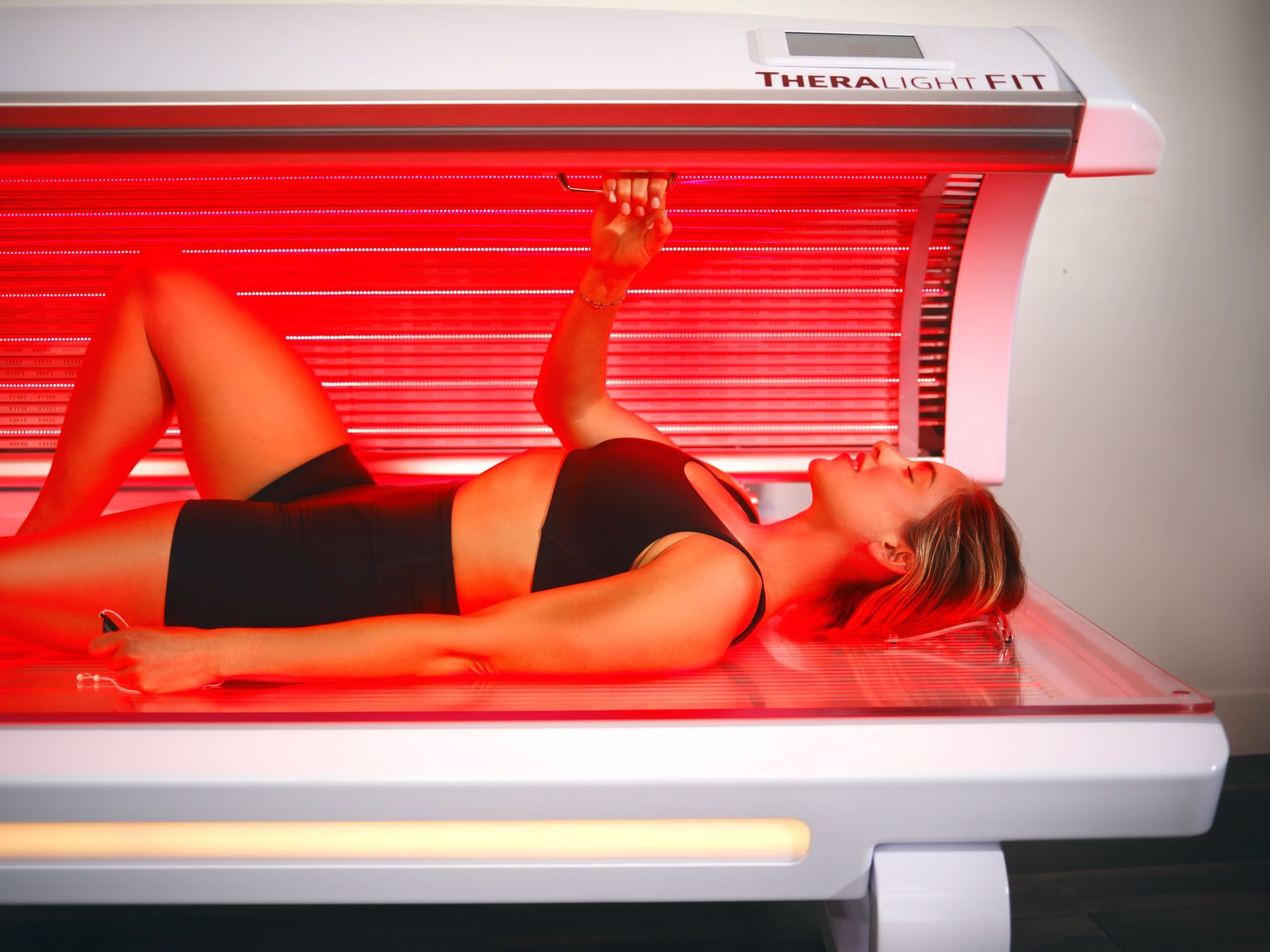
At Advantage Therapy Solutions, treatment protocols are selected based on the condition being treated and the depth of tissue that needs to be reached. The full-body pod delivers whole-body red and near-infrared exposure. The concentrated laser applies targeted, higher-intensity light to specific anatomical locations -- along a nerve path, over a joint, or at trigger points identified during assessment.
Most conditions benefit from both wavelengths used together. The red wavelength addresses surface inflammation and cellular repair. The near-infrared reaches deeper structures and has the stronger neurological effect.
Common questions
What patients ask before their first session
Does it hurt?
No. Most patients feel a gentle warmth during treatment, nothing more. There is no UV radiation, no burning, and no discomfort. People fall asleep in the pod regularly.
How many sessions does it take to see results?
This varies by condition and individual. Some patients notice changes after their first session. For chronic conditions -- nerve damage, long-standing pain, neurodegenerative disease -- consistent treatment over several weeks produces the most durable results. We track your progress and adjust the protocol based on how you respond.
Is it safe?
Yes. Photobiomodulation at therapeutic doses has an excellent safety record across decades of clinical research. It does not damage DNA or tissue. It does not cause cancer. It is contraindicated in a small number of circumstances -- active cancer at the treatment site, photosensitizing medications, and direct eye exposure without protective eyewear -- and we review these at consultation.
Is this the same as infrared sauna?
No. Infrared saunas work through heat. Photobiomodulation works through photochemistry -- the light is absorbed by specific molecules in cells, not converted to heat. The biological mechanisms are completely different. PBM has a much larger clinical research base for specific medical conditions.
What is the full-body pod at ATS?
The full-body pod delivers red and near-infrared light across the entire body simultaneously. It is used for systemic conditions -- autoimmune disease, widespread inflammation, neuropathy, fatigue, sleep -- where the goal is whole-body cellular support rather than treatment of a single location. Many patients use it in combination with targeted laser therapy on specific problem areas.
Why do not more doctors offer this?
The research base has grown rapidly, but adoption in conventional medicine lags behind the evidence -- as it typically does with non-pharmaceutical treatments. Most physicians are not trained in photobiomodulation and have no financial incentive to refer patients to it. ATS was built specifically around this technology, which is why the protocols here are more rigorous than what you would encounter as an add-on at a wellness spa or chiropractor's office.
What we treat
Conditions ATS addresses with laser and light therapy
Migraines and headaches
Sciatica and back pain
Diabetic neuropathy
Carpal tunnel syndrome
Trigeminal neuralgia
Parkinson's disease
Stroke recovery
Concussion and brain injury
Sleep and insomnia
Wound healing
Arthritis and joint pain
Autoimmune conditions
Fibromyalgia
Brain fog and fatigue
Ready to see what red light therapy can do for you?
A free consultation at Advantage Therapy Solutions starts with a thorough assessment of your condition and history. You will leave with a clear picture of what treatment looks like, how long it takes, and what results are realistic for your specific situation.
Non-invasive - Drug-free - No side effects - Greenville, NC and Eastern North Carolina