Red Light Therapy for Brain Fog
HEAL FASTER AND FEEL LESS PAIN

Red Light Therapy for Brain Fog in Greenville, NC
NON-INVASIVE • DRUG-FREE • NO DOWNTIME
Clearer thinking without more medication
Brain fog is a symptom, not a diagnosis. If your labs are normal but you still struggle to think clearly, you’re not imagining it.
Red and near-infrared light works at the cellular level to calm inflammation in the brain and give your cells the energy they need.
Book A Free ConsultationCommon Signs of Brain Fog
- Trouble focusing or remembering
- Mental exhaustion by midday
- Slower, cloudier thinking
- Losing words mid-sentence
- Brain fog after a concussion
- Fog with fatigue, thyroid or hormone changes
How Light Therapy Helps Brain Fog
Step 1
Reaches the brain directly. Red and near-infrared light passes through the skull and is absorbed by brain tissue. See our light therapy helmet
Step 2
Improves blood flow. More circulation and less inflammation help your brain keep up through the day.
Step 3
Fuels your brain cells. Light helps cells make more energy, supporting focus, mood and mental stamina. Explore our functional nutrition services
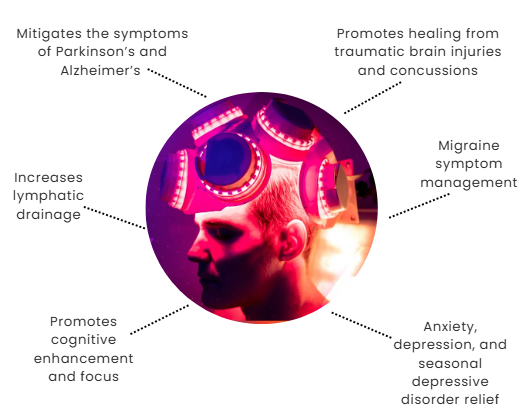
For patients dealing with cognitive symptoms, we often use our light therapy helmet, which delivers treatment directly to the head for targeted brain support. We may combine it with whole body light therapy and nutrition support. If your fog started after a head injury, see our brain conditions page.
What Patients in Eastern NC Are Experiencing

Our Patients Say:
I started helmet treatments in February while studying over 4 hours a day for my occupational therapy board exam. After using the helmet consistently, I took the board exam—a difficult, 4-hour test—and passed! I truly feel the helmet enhanced my ability to focus during such a long and demanding exam. Before starting the treatments, and I could barely stay focused for the full duration of a test. In addition to my focus, I also noticed reduction in my anxiety. People around me have also commented on improvements in my speech and fine motor skills—two areas affected by my brain injury. It has been an encouraging experience! – ATS helmet patient
What the Evidence Shows
Umbrella Review, 2025
A review of 15 meta-analyses covering 204 trials and over 9,000 people found moderate-quality evidence that light therapy improves cognitive function.
Systematic Review, 2023
29 of 35 human studies found that light therapy to the head improved memory, attention or thinking.
Randomized Trial, 2025
In 55 healthy older adults, light therapy to the forehead improved working memory accuracy and speed compared with a sham session.
Frequently Asked Questions
Does red light therapy really work?
Studies show that red and near-infrared light therapy can stimulate cellular repair, reduce inflammation, and promote healing. Read the light therapy research on our blog.
How many light therapy treatments do you need?
Most patients begin noticing improvement after several sessions, though treatment plans vary depending on the condition. Book a free consultation to get an accurate estimate.
Is red light therapy safe?
Yes. Light therapy is a non-invasive treatment with minimal side effects when performed correctly. Find out about whole body light therapy.
Is this covered by my insurance?
Our services are generally not covered by health insurance. However, we do offer Care Credit to help people easily afford our treatments.
Do I need a referral?
No. We offer free consultations and you can schedule directly.
Is this the same as light therapy for depression or seasonal affective disorder?
No. SAD light therapy uses bright white light to regulate circadian rhythms. Photobiomodulation uses red and near-infrared wavelengths to influence cellular function in tissues — including the brain. They’re different tools with different mechanisms.
Does it work for age-related cognitive decline?
Research into photobiomodulation and cognitive aging is ongoing and looks promising. It’s not a treatment for dementia or Alzheimer’s disease, but for patients experiencing normal age-related cognitive slowing, the circulatory and mitochondrial benefits may support clearer thinking.
Your Brain Can Work Better Than This.
If you’ve been living with mental fog and haven’t found a real answer, we’d like to talk. Call or text us at (252) 689-8729, or book online.
Non-invasive • Drug-free • No downtime
Book A Free Consultation