About This Condition
What Is Parkinson's Disease?
Parkinson's disease is a progressive neurodegenerative disorder caused by the loss of dopamine-producing neurons in the brain — specifically in an area called the substantia nigra. Dopamine is essential for coordinating smooth, controlled movement. As neurons die and dopamine levels fall, motor control deteriorates, producing the hallmark symptoms of tremor, rigidity, slowness of movement, and balance problems. Beyond motor symptoms, Parkinson's also causes significant non-motor effects: cognitive changes, sleep disruption, depression, loss of smell, and fatigue. Current treatments — levodopa, dopamine agonists, deep brain stimulation — help manage symptoms but do not slow or stop neurodegeneration. Photobiomodulation (PBM) works differently: it targets the mitochondrial dysfunction that underlies the death of dopaminergic neurons, reduces neuroinflammation in affected brain regions, and supports neuroprotection and nerve repair — making it one of the most scientifically compelling complementary approaches in Parkinson's research today.
Recognizing the Condition
Motor and Non-Motor Symptoms of Parkinson's Disease
Tremor at rest (hands, arms, jaw)
Muscle rigidity and stiffness
Slowness of movement (bradykinesia)
Balance and coordination problems
Shuffling gait or freezing of gait
Soft or slurred speech
Cognitive changes and brain fog
Sleep disturbances and fatigue
Depression or anxiety
Loss of sense of smell
Clinical Research
What the Evidence Shows
Randomized Controlled Trial — Journal of Clinical Medicine, 2023
A triple-blind, randomized placebo-controlled trial of 40 idiopathic Parkinson's patients using transcranial PBM (635nm + 810nm) for 12 weeks found that approximately 70% of active treatment participants responded with meaningful motor improvement — including significant gains in facial and lower-limb sub-scores on the MDS-UPDRS-III motor assessment. No safety concerns or adverse events were reported. Researchers concluded that tPBM is an increasingly attractive non-pharmaceutical adjunct therapy for Parkinson's disease.
Randomized Feasibility Trial — EClinicalMedicine (The Lancet), 2023
A double-blind, randomized, sham-controlled feasibility trial published in EClinicalMedicine (a Lancet journal) tested a transcranial PBM helmet in Parkinson's patients aged 59–85 for 12 weeks of home-based treatment. Significant improvements in mobility, gait, and motor signs were observed. Researchers concluded that transcranial photobiomodulation is safe, tolerable, and feasible as a non-pharmaceutical adjunct therapy for Parkinson's disease, and that the results support a larger powered clinical trial.
Five-Year Follow-Up Study — BMC Neurology, 2024
A five-year follow-up study published in BMC Neurology assessed Parkinson's patients who had continued home-based PBM therapy three times per week for five years. Researchers found that improvements in mobility, balance, cognition, and fine motor skill achieved in early treatment were substantially maintained across the five-year period — suggesting that continued PBM therapy may complement standard treatments and potentially delay Parkinson's symptom progression.
Treatment Approach
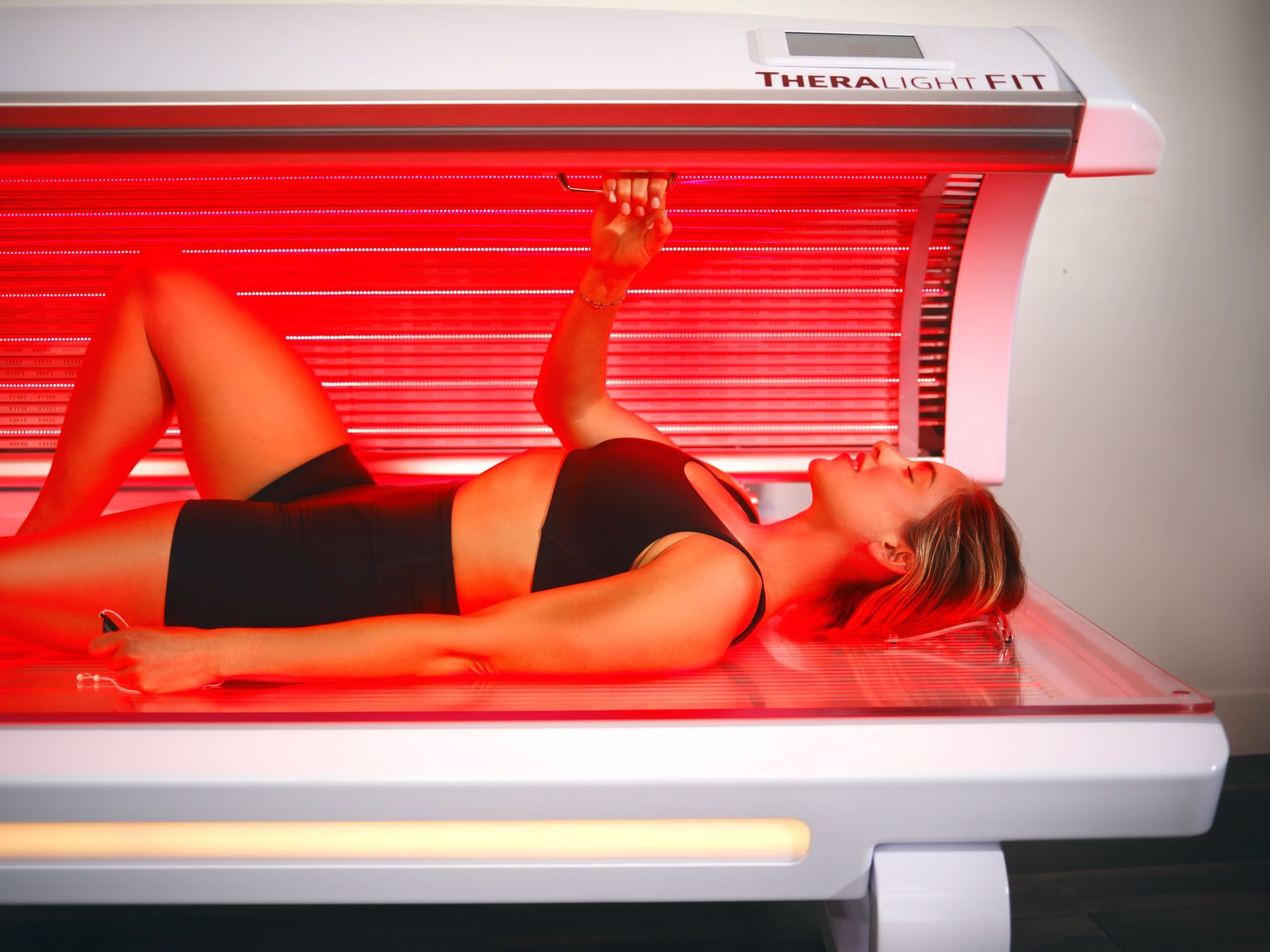
How Laser Therapy Supports Parkinson's Patients
1
Supports Mitochondrial Function
Parkinson's is fundamentally a disease of mitochondrial failure in dopaminergic neurons. PBM activates cytochrome-c-oxidase — a key mitochondrial enzyme — boosting ATP production and restoring cellular energy in compromised neurons.
2
Reduces Neuroinflammation
Chronic neuroinflammation accelerates the death of dopamine-producing neurons. Light therapy at near-infrared wavelengths penetrates the skull to reduce inflammatory markers in the brain regions most affected by Parkinson's.
3
Targets the Gut-Brain Axis
Research has established a strong link between the microbiome, gut, and Parkinson's progression. ATS treatment protocols address both transcranial and abdominal targets — consistent with clinical research showing benefits from remote PBM application to the gut-brain axis.
4
Improves Motor & Non-Motor Symptoms
Clinical trials document improvements in gait speed, balance, fine motor control, cognition, sleep quality, and sense of smell — addressing the full spectrum of Parkinson's impact, not just tremor.
Patient Outcomes
What Patients in Eastern NC Are Experiencing
"Since starting treatment at Advantage Therapy Solutions, I have more energy and focus much easier. My balance has improved and I feel more in control of my body. The staff is so caring, enthusiastic and supportive — I can't imagine not coming here."
— ATS Parkinson's patient, Eastern NC
Heidi Kittrell
★★★★★
2021
I sleep better, have more energy and focus much easier at work. The staff is so caring, enthusiastic and supportive!
Erin Stinson
★★★★★
2026
Since starting treatment, I've noticed less pain and inflammation, better flexibility, improved sleep, and clearer focus.
Parkinson's Disease Support in Greenville, NC
Advantage Therapy Solutions serves patients across Pitt County and Eastern North Carolina. A free consultation includes a full assessment of your current symptoms, medications, and treatment history — so you leave with a clear plan for how light therapy can complement your existing care.
Non-invasive • Drug-free • No side effects • Same-day appointments available